+39 02 8718 8553 sales@tanaza.com

Apple Makes It Harder To Track You In iOS 8


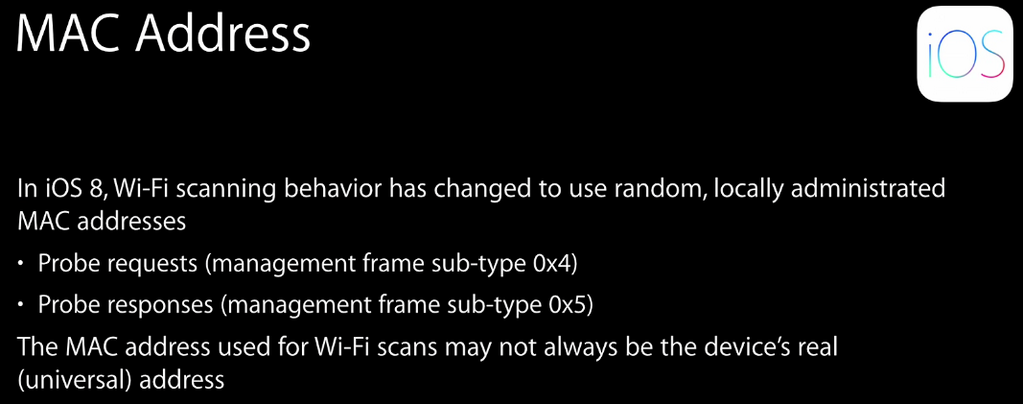
Apple has enabled MAC address randomization in iOS 8 (from Frederic Jacobs via HackerNews), which means it’s harder for marketers to keep track of your comings and goings in or around public Wi-Fi networks. In the updated software, while your iPhone is scanning for Wi-Fi networks, it assigns a “random, locally administered” MAC address, which is typically a constant, unique identifier attached to your phone’s wireless network interface.

ios-mac-random

(more…)

Wi-Fi Social Login flow

The Wi-Fi social hotspot application that you can enjoy within the Tanaza Cloud Management platform now includes a new tool that allows users to simulate the exact Wi-Fi client login flow.

Until yesterday, if you tried to open the splash page URL, you used to see the error displayed in the picture. In order to see how the splash page would be displayed to Wi-Fi clients, it was required to open it THROUGH the Wi-Fi Router / AP that was broadcasting the corresponding SSID. As quite a few Lead Users pointed out, it’s not always possible to “be there” at the customer premise, e.g. sometimes it’s required to make changes remotely and being able to see how the hotspot splash page appears in a shopping mall, in a café, restaurant or retail chain is a nice thing to have.

We introduced the Tanaza Splash Page Simulator, to solve this issue. It’s now possible to bypass the mentioned error page just activating the SIMULATION MODE of the splash page. This way you can apply the latest look-and-feel to your customer Social Hotspot splash page and test it out instantly, from anywhere. (more…)

Abuse control for your cloud-based WiFi social hotspot

Abuse control for your cloud-based WiFi social hotspot

Abuse control for your cloud-based Wi-Fi social hotspot


Have the guest Wi-Fi clients used too much bandwidth recently (see Bandwidth Control also), sitting there the whole day using “too much” free internet? Any neighbour or “guy in the street” stealing your Wi-Fi service to download large files, damaging your beloved guests experience? Well, we have the solution for you.

We just released an Abuse Control feature set which allows:

  • Setting a max number of sessions/connections per each user;
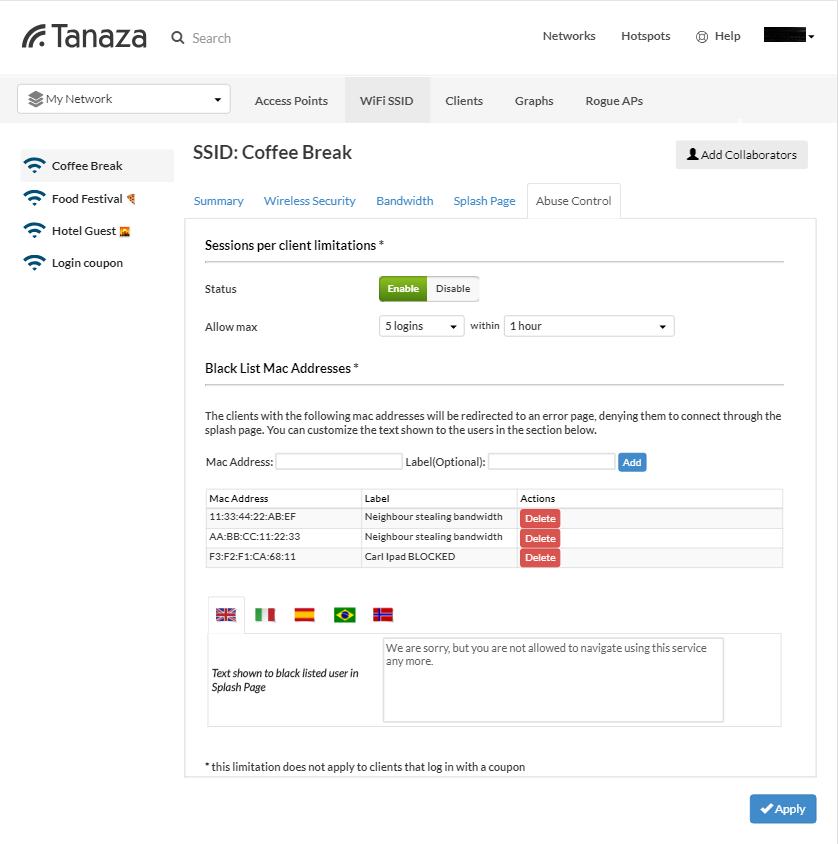
  • Blocking specific Wi-Fi clients, blacklisting them.


Abuse Control - Block Users with MAC Address
LIMITING MAX NUMBER OF CONNECTIONS

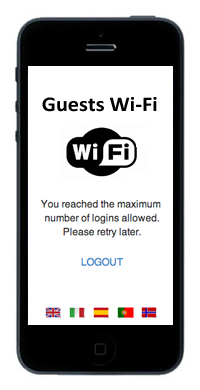
If you manage the Wi-Fi for a coffee shop chain, you’ll be able to avoid users having more than three 30-minutes-free-internet-sessions every 24 hours. In this case, any guest trying to connect more than three times to the Guest Wi-Fi will see the following message, advising them to come back later.

max-logins-001


BLACKLIST A SPECIFIC WI-FI CLIENT

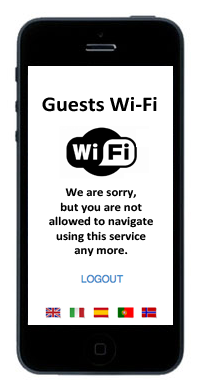
If for any reason you don’t want to provide a free connection to a specific Wi-Fi client, such as a neighbour that enjoys your free connection “too often”, well you can now block him, adding his/her MAC address to the BLACK LIST. In this case, such Wi-Fi client will see the following message when trying to connect to the Wi-Fi.

blocked-001

Bandwidth Control for your cloud-based WiFi

Bandwidth Control for your cloud-based WiFi

Bandwidth Control Blog

Have the guest Wi-Fi clients used too much bandwidth recently, stealing it from other Wi-Fi clients who were supposed to have priority? Well, this is not an issue anymore. You can now specify the maximum bandwidth per each SSID and protect the clients that matter most!

This is just a first step to implement a broader feature set that will allow to protect your Wi-Fi clients and control the policy to grant access. Our R&D is also working on:

  • per client bandwidth control: it will be possible not only to protect an SSID (such as the Members SSID from the Guests SSID), but also to protect a client accessing to a specific SSID from other clients that are connected to the same SSID.

The latest release also added the following feature:


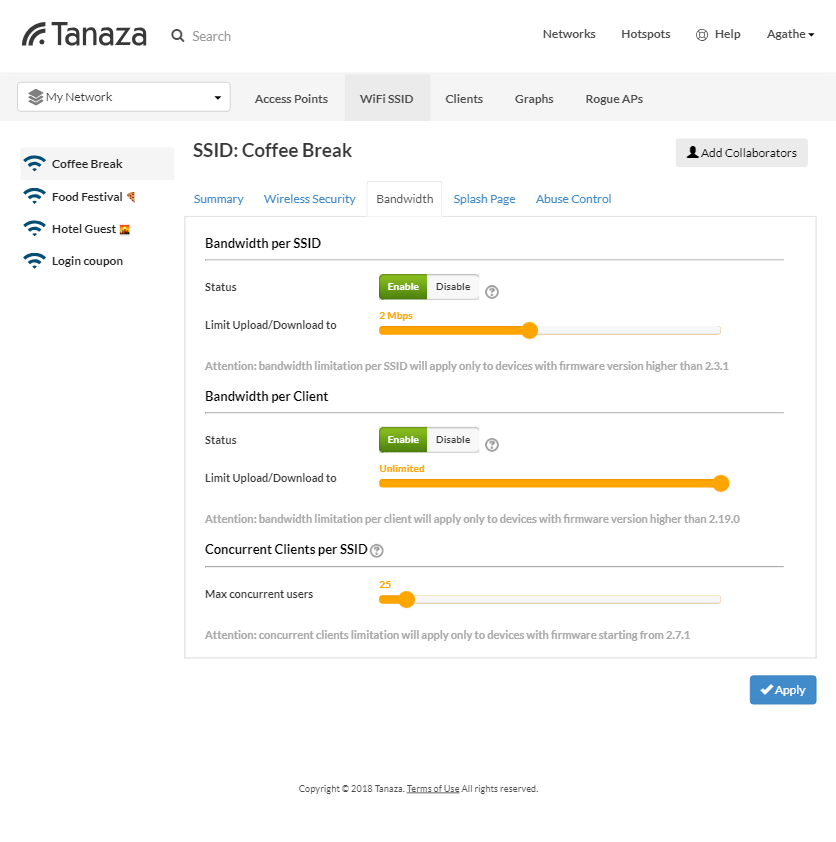
Bandwidth Control per SSID, per Client and Clients per SSID